How to Use Active Recall When You Study

Quick answer
Close your notes, try answering a focused question from memory, and then check your answer. Use the gaps you discover to decide what to review next.
Step-by-Step
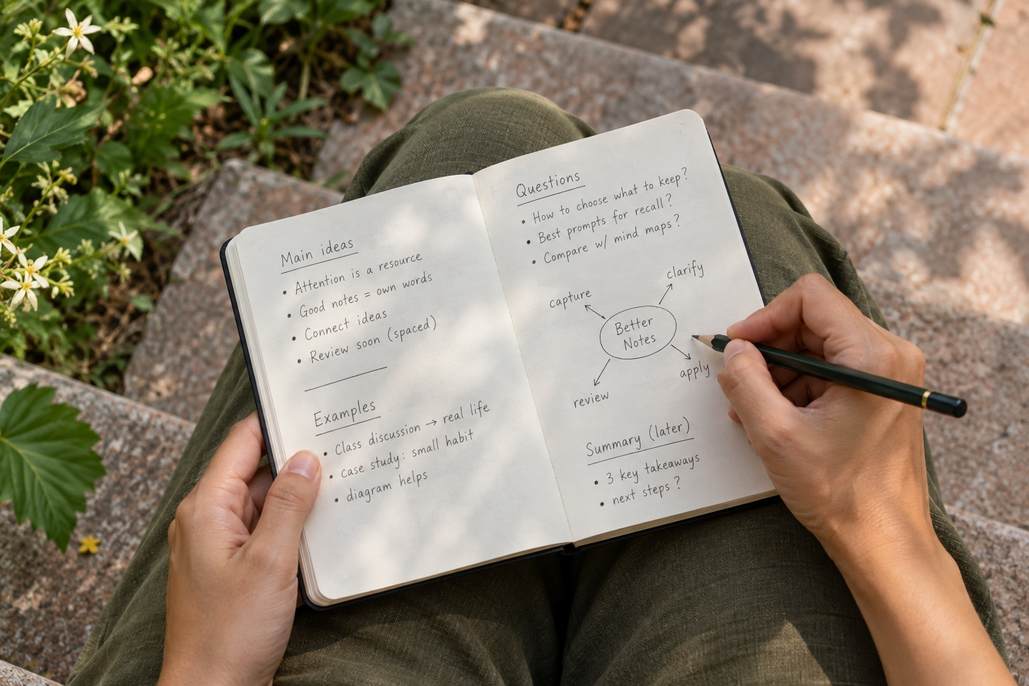
Turn a topic into questions
Write prompts that require an explanation rather than simple recognition.
Answer before looking at notes
Explain the idea from memory using a blank page or spoken response.
Check and correct missing details
Compare your answer with reliable material and revisit the specific gaps.
Quick Check
Two quick choices. A next step for you.
- 1Your situation
- 2A closer look
What are you facing right now?
Why can I recognize but not explain?
What happens without your notes?
What if I remember nothing yet?
Have you reviewed this small section?
Why do I repeat the same mistake?
What do you do after checking?
How do I choose my next question?
What did your last attempt reveal?
Your next step
Choose your situation to read the advice.
Why can I recognize but not explain?
I cannot start an explanation
Reduce the topic to one question. Attempt an answer without looking, then check the missing connection.
I start but miss key connections
Compare your explanation with the source. Identify the missing connection and test it again without rereading the whole chapter.
What if I remember nothing yet?
Not carefully enough yet
Review a small section first. Then close it and attempt a simpler question about what you just studied.
Yes, but my question is broad
Narrow the question to one idea. Try recalling that idea before adding more material.
Why do I repeat the same mistake?
I read the correction once
Write the correction beside your attempted answer. Test the same point again later with a different example.
I repeat the same example
Try a different example that tests the same point. Check whether you can explain why the corrected answer works.
How do I choose my next question?
One specific gap
Turn the missing detail into a focused question. Review that point, then close your notes and try answering it again from memory.
The whole topic feels too broad
Choose one small idea and write a question that asks you to explain it. Answer without notes, then compare with reliable material.
Common Mistakes
Looking at answers too early
Seeing the answer first removes the need to retrieve it independently.
Testing only comfortable topics
Include weak areas so practice reveals what still needs attention.
Leaving wrong answers uncorrected
Check your responses so mistakes do not become your practiced explanation.
Important Things to Know
Use trustworthy course material to check answers. Memorizing facts alone may not prepare you for application or problem solving.
Bottom Line
Test what you can produce, not just what looks familiar. Let each attempt identify your next useful review task.
Next article